Why visit Turkey?
Top five reasons to visit Turkey:


Top five reasons to visit Turkey:
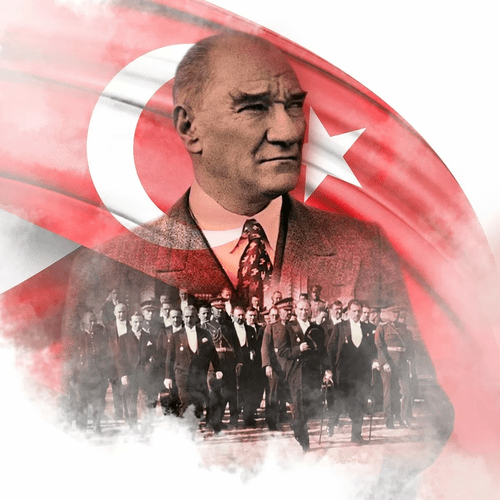
The history of Turkey, understood as the history of the region now forming the territory of the Republic of Turkey, includes the history of both Anatolia (the Asian part of Turkey) and Eastern Thrace (the European part of Turkey). Located at the crossroads of multiple civilizations, Turkey has many stories to tell. Almost every street, every building has a tale to share. If you are looking for a trip back in time, then the ticket you’ve been looking for is right here in Turkey.
From the time when parts of what is now Turkey was conquered by Turks, the history of Turkey spans the medieval history of the Seljuk Empire, the medieval to modern history of the Ottoman Empire, and the history of the Republic of Turkey since the 1920s. (Turkey map picture must be added)
Mustafa Kemal Atatürk, was a Turkish field marshal, revolutionary statesman, author, and founder of the Republic of Turkey, serving as its first President from 1923 until his death in 1938. His leadership undertook sweeping progressive reforms, which modernized Turkey into a secular, industrial nation. (Ataturk picture must be added)

The culture of Turkey combines a heavily diverse and heterogeneous set of elements that have been derived from the various cultures of the Eastern Mediterranean (West Asian) and Central Asian region and Eastern European, and Caucasian traditions. Many of these traditions were initially brought together by the Ottoman Empire, a multi-ethnic and multi-religious state.
During the early years of the republic, the government invested a large amount of resources into fine arts such as paintings, sculpture and architecture. This was done as both a process of modernization and of creating a cultural identity. Because of the different historical factors defining the Turkish identity the culture of Turkey combines clear efforts of modernization and Westernization undertaken in varying degrees since the 1800s with a simultaneous desire to maintain traditional religious and historical values.
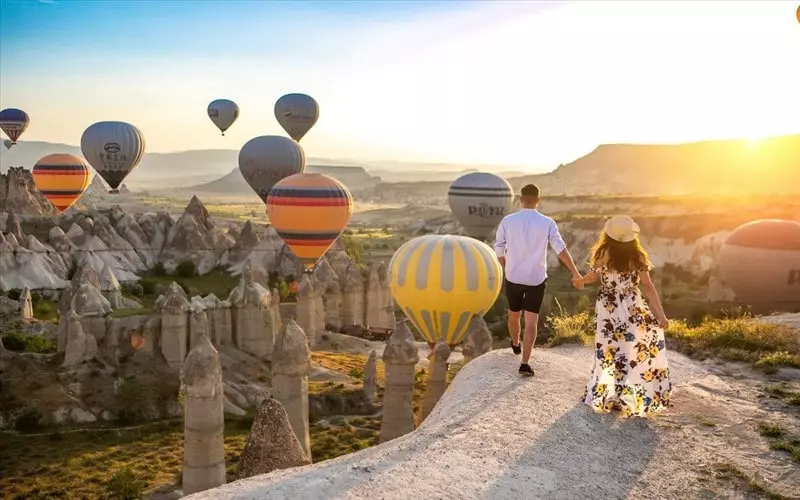
Turkey is well known for its UNESCO world heritage sites Göreme National Park and the Rock Sites of Cappadocia. The area is a popular tourist destination, as it has many areas with unique geological, historic, and cultural features. Hot-air ballooning is very popular in Cappadocia and is available in Göreme. Trekking is enjoyed in Ihlara Valley, Monastery Valley (Guzelyurt), Ürgüp and Göreme. (Picture must be added)
Ephesus. The city was famed for the nearby Temple of Artemis, one of the Seven Wonders of the Ancient World. Among many other monumental buildings are the Library of Celsus, and a theatre capable of holding 25,000 spectators. Ephesus was one of the seven churches of Asia that are cited in the Book of Revelation. The Gospel of John may have been written here. The ruins of Ephesus are a favourite international and local tourist attraction, partly owing to their easy access from Adnan Menderes Airport or from the cruise ship port of Kuşadası, some 30 km to the South. (Picture must be added)
Hierapolis-Pamukkale. Deriving from springs in a cliff almost 200 m high overlooking the plain, calcite-laden waters have created at Pamukkale (Cotton Palace) an unreal landscape, made up of mineral forests, petrified waterfalls and a series of terraced basins. At the end of the 2nd century B.C. the dynasty of the Attalids, the kings of Pergamon, established the thermal spa of Hierapolis. The ruins of the baths, temples and other Greek monuments can be seen at the site. (Picture must be added)

In the last 10 years, Turkey has wholeheartedly embraced many concepts to boost tourism to the country. One such example that is a winner with the crowds, both domestic and foreign is spa and wellness centers, all over the country but mainly in the coastal resorts of the Mediterranean and Aegean so visitors can make the most of the sun while they get into shape, and rejuvenate into tiptop shape. Whether it is for relaxation, body cleansing, or mind and soul embracement, spa and wellness centers in Turkey continue to make a roaring trade from both Turks and foreign visitors. (Picture must be added)
Spa centers have existed in Turkey for thousands of years, so all we are seeing now is a modernization and expansion of the concept. The ancient city of Hierapolis in the Denizli region of Anatolian Turkey was for many years a resting center for wounded Roman soldiers. Relying on the flowing spring waters from nearby Pamukkale that are heavily fortified with calcium, they combined the healing qualities of the water with their love for gods and pilgrims’ temples.
If you travel to Turkey, you can’t miss a day at the hamam. Turkish bath is a place of public bathing associated with the culture of the Ottoman Empire and more widely the Islamic world. A variation on it as a method of cleansing and relaxation became popular during the Victorian era, and then spread through the British Empire and Western Europe. The buildings are like Roman thermae. Unlike Russian saunas (banya), which use steam, Turkish baths focus on water. (Pictures must be added)

Turkish cuisine varies across the country. The cooking of Istanbul, Bursa, Izmir, and rest of the Asia Minor region inherits many elements of Ottoman court cuisine, with a lighter use of spices, a preference for rice over bulgur, koftes and a wider availability of vegetable stews (türlü), eggplant, stuffed dolmas and fish. The cuisine of the Black Sea Region uses fish extensively, especially the Black Sea anchovy (hamsi) and includes maize dishes. The cuisine of the southeast (e.g. Urfa, Gaziantep, and Adana) is famous for its variety of kebabs, mezes and dough-based desserts such as baklava, şöbiyet, kadayıf, and künefe.
Especially in the western parts of Turkey, where olive trees grow abundantly, olive oil is the major type of oil used for cooking. The cuisines of the Aegean, Marmara and Mediterranean regions are rich in vegetables, herbs, and fish. Central Anatolia has many famous specialties, such as keşkek, mantı (especially from Kayseri) and gözleme.
A specialty’s name sometimes includes that of a city or region, either in or outside of Turkey, and may refer to the specific technique or ingredients used in that area. For example, the difference between Urfa kebap and Adana kebap is the thickness of the skewer and the amount of hot pepper that the kebab contains. Urfa kebap is less spicy and thicker than Adana kebap. Although meat-based foods such as kebabs are the mainstay in Turkish cuisine as presented in foreign countries, native Turkish meals largely center around rice, vegetables, and bread.
Frequently used ingredients in Turkish specialties include lamb, beef, rice, fish, eggplants, green peppers, onions, garlic, lentils, beans, zucchinis and tomatoes. Nuts, especially pistachios, chestnuts, almonds, hazelnuts, and walnuts, together with spices, have a special place in Turkish cuisine, and are used extensively in desserts or eaten separately. Semolina flour is used to make a cake called revani and irmik helvasi. (Pictures must be added)
Although most Turks profess the Islamic religion, alcoholic beverages are as widely available as anywhere. However, some Turks abstain from drinking alcohol during the holy month of Ramadan. Rakı is the most popular alcoholic drink in Turkey and it is considered as the national alcoholic beverage. (Pictures must be added)
At breakfast and all day long, Turkish people drink black tea (çay). Tea is made with two teapots in Turkey. Strong bitter tea made in the upper pot is diluted by adding boiling water from the lower. Turkish coffee (kahve) is usually served after meals or with dessert. (Pictures must be added)
Ayran (yogurt drink) is the most common cold beverage, which may accompany almost all dishes in Turkey, except those with fish and other seafood. It’s a mix of yogurt and water and it may be served with salt, according to taste. (Pictures must be added)
Copyright © 2022 Business Connect
We inform you that this site uses own, technical and third parties cookies to make sure our web page is user-friendly and to guarantee a high functionality of the webpage. By continuing to browse this website, you declare to accept the use of cookies.